

Centipede: Characteristics, Habitats, and Fascinating Facts About This Many-Legged Predator.
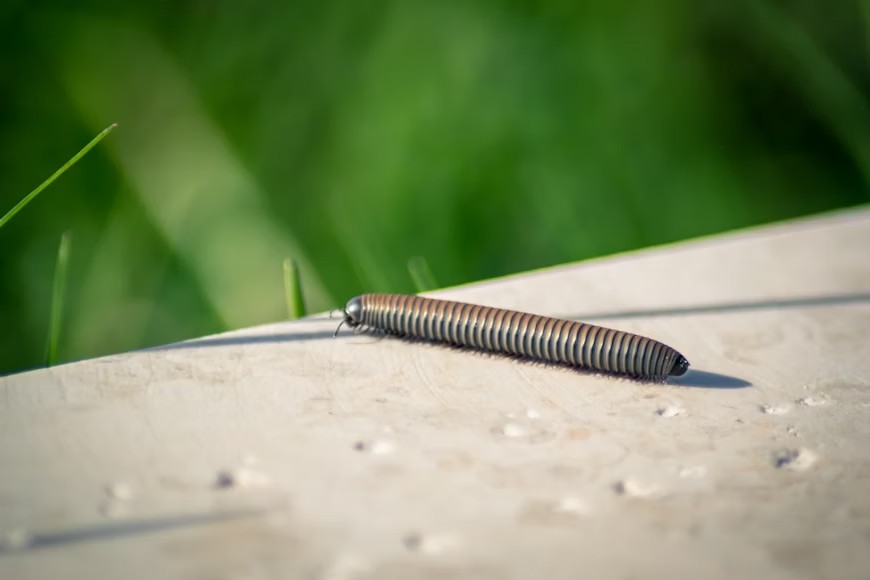
Centipedes are fascinating arthropods with elongated bodies and many legs, making them fast predators.
They belong to the class of Chilopoda, and can be found in various environments ranging from tropical rain forests to deserts.
One of the characteristics of centipedes is the ability to thrive in damp, dark habitats like inside soil crevices, under rocks, and leaf litter.
Characteristics of Centipedes
The characteristics of centipede are discussed under the headings below.
- Body Structure
Centipedes have elongated and flattened bodies that are divided into multiple segments.
Asides from the first and last, every other segment has a pair of legs.
Their body length ranges from a few millimeters for smaller species to more than 30 centimeters in large tropical species.
- Number of Legs
As the name implies, it is believed that centipedes have 100legs but Interestingly, they don’t have 100legs rather they possess an odd number of leg pairs from 15 to 177 pairs. This is so because their body segments develop in odd numbers.
With their many legs, they move very fast making it easier for them to hit their target prey and also dash into hiding if need be.
- First Pair of Legs
The first pair of a centipede’s legs is made in a pincer-like structure known as forcipules.
These legs serve dual purposes which are for walking and injecting venom into its prey. The legs are connected to venom glands, making them a key tool for hunting its prey.
The venom contains a mix of toxins that paralyzes its prey and also aids digestion. In humans, a bite can result in sharp pain, swelling, redness, and sometimes numbness but it is never life-threatening.
- Exoskeleton
Centipedes have their bodies covered with a chitinous exoskeleton that is both strong and flexible. This covering helps to prevent excessive loss of water and also protects them from physical harm.
- Antennae
The long, slender, and highly sensitive antennae on their heads is one of the unique characteristics of centipedes that helps them to smell, detect vibrations, and identify changes in the environment.
It is a life saving tool because it help them avoid predators, especially in the dark.
- Vision

These species have clusters of simple eyes. These eyes help them to detect and make movement easy but unfortunately it can’t form sharp images.
Some species that live in the soil and caves have lost their eyes completely and depend on smell and physical contact.
- Diet and Hunting Style
Centipedes are carnivorous in nature. They feed on worms, insects, spiders, frogs and lizards. They take advantage of their venom and speed to immobilize prey before consuming it .
- Growth
Centipedes grow by molting, shedding off its old exoskeleton and making new and larger ones. Some species add new body segments and legs with each molt while others are born with their full set of segments.
Depending on the species but generally, centipedes live from between 1 to 6 years.
Centipede Habitats
Due to their nature of being prone to dehydration, centipedes prefer moist and dark habitats.
They are usually found in damp and sheltered places where they can hide during the day and hunt at night.
Below is a list of common centipede habitats.
- Soil and Leaf Litter

Loose, moist soil offers an ideal hiding place for centipedes while decaying plants help to supply a steady amount of prey such as insects and worms.
They often hide in soil crevices to keep them from direct sunlight, prevent dehydration and maintain body moisture.
- Logs and Stones

Fallen logs, rotten logs and stones are the common centipede habitats because they trap moisture beneath.
Various invertebrates can also be found in these places, making them perfect hunting grounds for centipedes.
- Human Habitations
Basements, bathrooms, and kitchens are also classified as one of centipede habitats because the moisture levels are high in those places.
Centipedes are usually found more indoors whenever the weather conditions outside are not favourable. This is common during droughts, heavy rains, or cold weather.
Fascinating Facts About Centipedes
Here are some amazing fun facts about centipedes.
- Not Always 100 Legs
Depending on the species, centipedes never have exactly 100 legs as their name implies; rather they can have from 15 to over 350 legs, and the number is usually odd-paired which implies that it can never be 100.
- .Leg Speed Demons
This fun fact about centipedes rank centipedes as one of the fastest arthropods.
Some species, like the house centipede, can run about 1.3 feet in a second.
- Venomous Hunters
All centipedes have venom glands connected to their front legs to inject toxins into prey.
- Regenerative Abilities
Just as hair can grow back on a human head, a centipede has the ability to grow back missing parts of its body.
For instance,If a centipede loses a leg, it can grow it back during subsequent molts.
- Night Owls
This fun fact about centipedes is true because they love to hunt under the cover of darkness.
Other fun facts about centipedes are;
- Diverse sizes
- Moisture lovers
- Amazing lifespan
- Global citizens
Final Thoughts
Centipedes are not just multi-legged crawlers hiding in dark corners, they are ancient predators with fascinating adaptations.
From their fast movements to their venomous hunting tools and span of life, centipedes contribute largely to reducing the insect population.
Their ability to live in tropical rainforests or beneath garden rocks, makes them a testament to nature’s ability to craft resilient creatures.
Their unique biology and global presence make them a subject of study and a reminder that even the smallest animal can have an amazing story.
Frequently Asked Questions (FAQs)
These are some questions people ask about centipedes.
- Do centipedes really have 100 legs?
No. The number of their legs varies by species and it ranges from 15 to over 350. They have an odd number of leg pairs, so it is never exactly 100.
- Are Centipedes Dangerous to Humans?
Most centipedes are not dangerous, although their bites can be painful but it’s usually not life threatening to humans.
- What Do Centipedes Eat?
Centipedes feed on insects, spiders, worms, and small vertebrates like lizards
- Where Do Centipedes Live?
The common centipedes habitat is often dark, damp environments like soil, leaf litter, rotting logs, and under stones.
They can also be found in homes of humans especially in bathrooms, and closets.
- Are Centipedes Insects?
No. They are arthropods but belong to the class Chilopoda.
- Do Centipedes Have Benefits?
Yes. They control pest populations by feeding on insects.